
Author: Silvia Kumanova
Serotonin is often referred to as the ‘happiness hormone’. But can a single substance really determine how happy we are? Science reveals a much more interesting picture. Serotonin plays a part in regulating mood, sleep, appetite, digestion and a number of other physiological processes. Its role, however, is considerably more complex than popular belief suggests.
Why do we sometimes feel calm and content, whilst at other times we are irritable, anxious or depressed? Can the food we eat influence our mood? And what is the connection between the brain, the gut and our emotional state?
The answers to these questions are often sought in serotonin.
In popular publications, it is presented as the chemical that makes us happy. It is sometimes even claimed that if we increase its levels, we will automatically improve our mood.
The reality is more complex.
Serotonin is part of numerous regulatory systems in the body. It interacts with other neurotransmitters, hormones and physiological mechanisms, which together influence the way we feel and function.
To understand its importance, we must first look at what it is and how it works.
What is serotonin?
Serotonin, also known as 5-hydroxytryptamine or 5-HT, is a biologically active substance that performs various functions in the body.
In the central nervous system, it acts as a neurotransmitter – a chemical messenger through which nerve cells exchange information.
Serotonin is involved in regulating:
- Mood and emotional responses.
- Sleep and wakefulness.
- Appetite and the feeling of fullness.
- Learning, memory and cognitive processes.
- The perception and processing of pain.
- Intestinal motility and digestion.
- Certain processes related to blood clotting and vascular function.
These various effects are possible because serotonin acts via numerous types of receptors located in different organs and tissues.
Depending on the receptor and the site of action, it can trigger different, and sometimes opposing, physiological responses.
This is one of the reasons why we cannot simply define serotonin as a substance that ‘lifts the mood’.
Surprising fact: most serotonin is produced in the gut
When we talk about serotonin, we usually picture the brain.
In fact, approximately 90–95 per cent of the serotonin in the human body is synthesised in the gastrointestinal tract, mainly by specialised cells in the intestinal mucosa.
There, it plays a role in regulating intestinal motility, secretion and communication between different cells.
Serotonin in the brain has other important functions.
However
,
there is a significant difference between the two systems.
Serotonin produced in the gut does not freely cross the blood-brain barrier and cannot directly increase serotonin levels in the brain.
This means that when we talk about the link between diet, digestion and mood, we cannot explain it simply by the amount of serotonin produced in the gut.
The connection between the brain and the digestive system is mediated by complex neural, immune, hormonal and metabolic mechanisms.
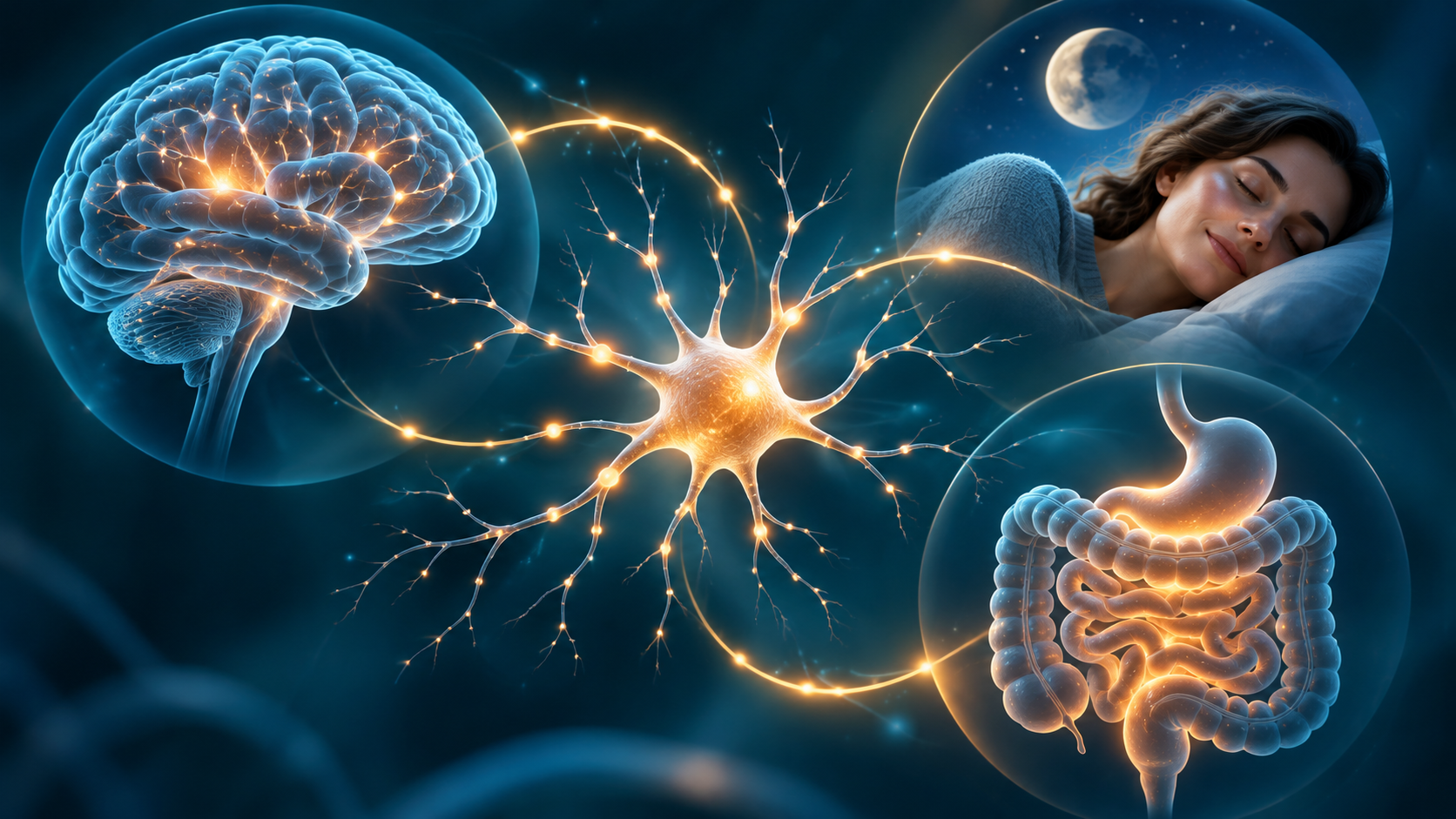
This two-way communication is known as the ‘gut-brain axis’.
It is one of the most actively researched areas in modern neuroscience.
Serotonin and mood: is it really the ‘happiness hormone’?
Serotonin undoubtedly plays a role in the brain mechanisms associated with mood and emotional regulation.
But this does not mean that happiness is determined by its levels.
Emotions result from the interaction between numerous brain structures, neurotransmitters, hormones, personal experience and environmental factors.
The serotonergic system interacts with other systems, including those involving dopamine, noradrenaline and glutamate.
That is why the idea that more serotonin means more happiness is far too simplistic.
And what is the link to depression?
For decades, a popular explanation for depression was that it was caused by low levels of serotonin in the brain.
Today, we know that the scientific evidence does not support such a straightforward explanation.
In 2022, a large-scale systematic review was published in the journal *Molecular Psychiatry*
, which examined the evidence for the so-called serotonin hypothesis of depression.
The authors found no convincing evidence that depression as a whole is caused by reduced serotonin concentrations or activity.
Discussion continues within the scientific community regarding the methodology and interpretation of these results, as well as the specific role of the serotonergic system in depressive disorders.
It is important to distinguish between two things.
Firstly, depression cannot be explained simply as a chemical deficiency.
Secondly, this does not mean that medicines which act on the serotonergic system are ineffective.
Antidepressants from the group of selective serotonin reuptake inhibitors (SSRIs) have proven efficacy in certain conditions, although the mechanisms of their therapeutic action are not limited to a simple increase in serotonin concentration.
Mental health is not determined by a single neurotransmitter. It is the result of complex biological, psychological and social processes.
How does serotonin affect sleep?
Serotonin plays a role in regulating sleep and wakefulness, but its action depends on specific brain structures, receptors and physiological state.
Its relationship with melatonin is particularly interesting.
Melatonin is a hormone involved in synchronising circadian rhythms – the body’s internal biological clock, which helps the body adapt to the day-night cycle.
In the pineal gland, serotonin acts as a biochemical precursor for the synthesis of melatonin.
However, this does not mean that increasing serotonin levels will necessarily improve sleep.
Sleep regulation depends on numerous factors, including circadian mechanisms, accumulated sleep debt, light, stress and other neurochemical systems.
Insufficient or disrupted sleep, in turn, can affect emotional regulation, attention and our ability to cope with stress.
That is why looking after our sleep is an important part of maintaining mental health.
You can read more about the mechanisms of sleep in the article ‘What is sleep and why is it important for us?’.
Serotonin, appetite and digestion
The role of serotonin is not limited to the brain.
In the digestive system, it helps control intestinal motility and the transmission of signals related to the function of the gastrointestinal tract.
In the central nervous system, certain serotonin receptors are involved in regulating appetite and the feeling of fullness.
However, this does not mean that serotonin is the only regulator of eating behaviour.
Appetite is influenced by various hormonal, metabolic, neural and psychological factors.
This is precisely why, when under stress, some people start to eat more, whilst others lose their appetite.
There is no single mechanism that explains these differences.
How does the body produce serotonin?
Serotonin is synthesised from the amino acid tryptophan.
Tryptophan is an essential amino acid, which means that the body cannot produce it itself and must obtain it from food.
During the synthesis process, tryptophan is first converted into 5-hydroxytryptophan (5-HTP) and then into serotonin.
These reactions are carried out by specific enzymes and require certain cofactors, amongst which vitamin B6 plays an important role.
However, a higher intake of tryptophan does not automatically mean higher serotonin production in the brain.
Tryptophan must cross the blood-brain barrier, a process in which it competes with other amino acids.
Furthermore, the synthesis and action of serotonin are regulated by a number of biochemical mechanisms.
Consequently, there is no single food that, on its own, guarantees a lift in mood by increasing serotonin levels in the brain.
Seven habits that support mental health
Although we cannot directly control our mood through serotonin levels, our lifestyle affects the overall functioning of the nervous system.
Here are a few scientifically backed approaches that can support mental and physical health.
1. A balanced diet
Our diet provides the nutrients necessary for the normal functioning of the nervous system.
Sources of tryptophan include:
- Eggs.
- Dairy products.
- Fish and meat.
- Pulses.
- Nuts and seeds.
However, it is important not to focus on a single amino acid.
A varied diet, which provides sufficient protein, vitamins, minerals, fibre and healthy fats, has broader implications for health.
The Mediterranean diet, for example, has been the subject of numerous studies into the link between dietary habits and mental wellbeing.
The results are promising, but they do not mean that a particular diet can replace psychological or medical therapy.
2. Regular physical activity
Physical activity has proven benefits for mental and physical health.
A meta-analysis published in The BMJ in 2024 shows that various forms of physical exercise can reduce symptoms of depression.
The benefits of exercise are linked to a variety of mechanisms – changes in neural plasticity, inflammatory processes, stress regulation and the functioning of various neurotransmitter systems.
Serotonin is part of this complex picture, but it is not the only explanation.
You don’t need to start with intense workouts.
Regular walking, swimming, cycling or other enjoyable physical activity can be a good first step.
3. Good-quality sleep
Sleep is essential for the normal functioning of the brain and the nervous system.
For most adults, the recommended duration is around 7–9 hours a night.
But the quality of sleep is just as important as its duration.
Try to maintain a relatively consistent routine, limit bright light in the evening and ensure a suitable environment for rest.
If you consistently wake up feeling exhausted or experience sleep disturbances, it is important to investigate the causes.
4. Natural daylight
Light is one of the most important external cues for regulating the body’s internal clock.
Exposure to natural light in the morning helps the body synchronise its circadian rhythms.
This can support the sleep-wake cycle and indirectly influence mood.
There is also research into the link between seasonal changes in light levels and the serotonergic system.
However, it is not scientifically accurate to claim that sunlight automatically increases serotonin production via vitamin D.
The links between light, vitamin D, serotonin and mental health are complex and continue to be studied.
Spending time outdoors every day, whilst taking appropriate precautions against excessive UV exposure, is a beneficial habit.
5. Managing chronic stress
Prolonged stress can affect the functioning of many systems in the body.
The neuroendocrine mechanisms of stress also interact with the brain systems involved in regulating mood.
However, we cannot assume that stress always leads to a reduction in serotonin.
Its effect depends on duration, individual characteristics, specific brain structures and a number of other factors.
Relaxation techniques, calm breathing exercises, physical activity and conscious planning of recovery can be helpful in maintaining mental health.
When the main source of stress is linked to living or working conditions, it is important to seek real changes in one’s environment.
6. Maintaining social connections
Meaningful relationships with others are a key factor in mental health.
Social support can help us cope with difficult situations, reduce feelings of isolation and create a sense of belonging.
It is sometimes claimed that socialising directly increases serotonin levels.
Although social interactions involve complex neurobiological processes, there is no basis for viewing their positive impact as the result of a single neurotransmitter.
It is more important to build relationships based on trust, reciprocity and support.
7. Limiting alcohol and psychoactive substances
Alcohol can temporarily alter one’s mood and create a sense of relaxation.
However, it affects numerous neurotransmitter systems and can disrupt sleep quality, increase anxiety and impair emotional regulation.
The use of certain psychoactive substances can also affect the serotonergic system and pose serious health risks.
Limiting these substances is part of looking after your nervous system.
Can we measure our serotonin levels?
This is one of the most frequently asked questions.
Serotonin can be measured in certain biological samples, but such tests do not directly indicate how the serotonergic system functions in the brain.
Blood serotonin levels are not a reliable indicator of depression, anxiety or general mental wellbeing.
There is no universally accepted laboratory test to determine whether a person is depressed due to a ‘serotonin deficiency’.
The diagnosis of mental disorders is based on clinical assessment, symptoms, the duration of symptoms, functional difficulties and, where necessary, additional medical investigations.
This is an important distinction between scientific research into neurotransmitters and their use in clinical practice.
And what about serotonin and 5-HTP supplements?
Various dietary supplements are available on the market that promise to improve mood by increasing serotonin levels.
These include products containing tryptophan or 5-hydroxytryptophan (5-HTP).
However, these substances are not without risk, and there is insufficient convincing evidence that they are a suitable universal treatment for depression or anxiety.
It is particularly important to be aware that combining serotonergic supplements with certain medicines, including some antidepressants, may increase the risk of serotonin syndrome.
This is a potentially dangerous condition which can present with agitation, a high temperature, sweating, tremors and disturbances in neuromuscular function.
It is therefore not advisable to take such supplements without consulting a doctor.
If you are already taking prescribed antidepressants, do not change or stop your treatment on your own.
Why can’t good mental health be reduced to a single neurotransmitter?
The human brain is an extremely complex system.
It contains numerous interconnected neural networks that utilise various chemical messengers.
Serotonin, dopamine, noradrenaline, glutamate and GABA are just some of the substances involved in regulating behaviour and physiological processes.
However, brain functions are not determined by these alone.
Neural plasticity, hormonal regulation, immune mechanisms, genetic characteristics, life experiences and the environment also play a significant role.
Therefore, good mental health cannot be achieved simply by increasing the levels of a single substance.
It depends on the interaction between biological, psychological and social factors.
You can read more about the complex mechanisms of brain function in the article ‘Myths and Facts about the Brain’.
Serotonin is important, but happiness is about much more than just chemistry
Serotonin is an indispensable part of the complex system through which the brain and the body regulate their functions.
It plays a role in mood, sleep, eating, digestion and many other physiological processes.
But it is not a standalone ‘source of happiness’.
Modern science is gradually replacing simplistic notions of chemical balance with a much more holistic understanding of mental health.
This understanding encompasses neurobiology, but also personal experience, relationships, the working environment, sleep, physical activity and opportunities for recovery.
Looking after our mental health does not mean trying to control a single neurotransmitter. It means creating conditions in which the brain and body can function as well as possible.
Sometimes this starts with small changes to our daily routine.
At other times, it requires a professional assessment, psychological support or medical treatment.
The most important thing is to understand that mental wellbeing is not simply a matter of chemistry, but of the complex interplay between biology and the way we live.
Scientific sources
- Berger, M., Gray, J. A., & Roth, B. L. (2009). The Expanded Biology of Serotonin. Annual Review of Medicine, 60, 355–366. https://doi.org/10.1146/annurev.med.60.042307.110802
- Moncrieff, J., et al. (2023). The Serotonin Theory of Depression: A Systematic Umbrella Review of the Evidence. Molecular Psychiatry, 28, 3243–3256. https://doi.org/10.1038/s41380-022-01661-0
- Jauhar, S., et al. (2023). A Leaky Umbrella Has Little Value: Evidence Clearly Indicates the Serotonin System Is Implicated in Depression. Molecular Psychiatry, 28, 3149–3152. https://doi.org/10.1038/s41380-023-02095-y
- Mawe, G. M., & Hoffman, J. M. (2013). Serotonin signalling in the gut—functions, dysfunctions and therapeutic targets. Nature Reviews Gastroenterology & Hepatology, 10, 473–486. https://doi.org/10.1038/nrgastro.2013.105
- Noetel, M., et al. (2024). Effect of Exercise on Depression: A Systematic Review and Network Meta-analysis of Randomised Controlled Trials. The BMJ, 384, e075847. https://doi.org/10.1136/bmj-2023-075847
- Young, S. N. (2007). How to Increase Serotonin in the Human Brain Without Drugs. Journal of Psychiatry & Neuroscience, 32(6), 394–399.
- StatPearls Publishing. Physiology, Serotonin. National Centre for Biotechnology Information. https://www.ncbi.nlm.nih.gov/books/NBK545168/
- National Institute of Mental Health (NIMH). Depression. https://www.nimh.nih.gov/health/topics/depression