
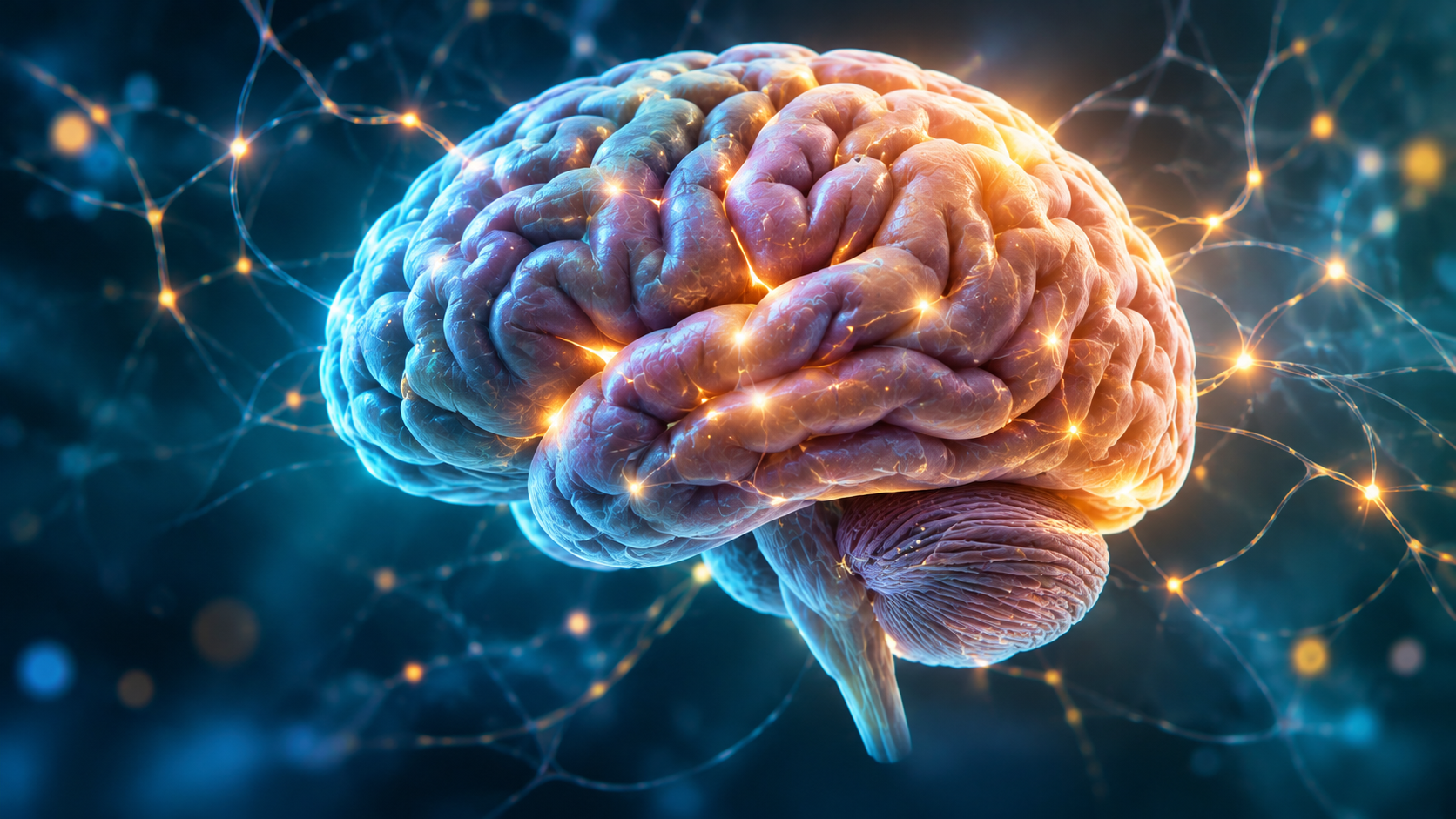
Do we really only use 10 per cent of our brain? Do some people really think mainly with the left hemisphere, whilst others think mainly with the right? Can listening to Mozart make us more intelligent? The brain is one of the most complex organs in the human body, but our ideas about it are often influenced more by popular myths than by scientific evidence.
The human brain is a remarkable organ. It enables us to perceive the world, to learn, to remember, to make decisions, to experience emotions and to build relationships.
Thanks to it, we create language, technology, art and culture. It plays a part in regulating vital functions, often without us even realising it.
Despite advances in neuroscience, numerous myths about the brain persist.
Some sound so convincing that they are even propagated in educational materials, training courses and personal development programmes.
The problem is that these misconceptions can create unrealistic expectations regarding learning, memory, intelligence and human capabilities.
And the actual scientific findings are often far more interesting.
Myth 1: We only use 10 per cent of our brain
Fact: We use different brain networks depending on the activity we are performing.
One of the most widespread myths is that people use only 10 per cent of their brain, whilst the remaining 90 per cent represents untapped potential.
This has given rise to claims that, through certain techniques, we can unlock hidden abilities, exceptional intelligence or even supernatural powers.
Scientific research does not support this idea.
Methods for studying brain activity, including functional magnetic resonance imaging and electroencephalography, show that different areas of the brain are involved in different tasks.
When we read, speak, move or recall an event, specific networks are activated.
Even whilst resting, the brain is not inactive.
At such times, networks involved in internalised thought, memory and information processing are active.
However, this does not mean that all neurons must be at their most active at the same time.
Normal brain function requires a precise balance between excitatory and inhibitory processes.
Brain efficiency does not depend on the simultaneous activation of all areas, but on the coordinated work of different neural networks.
Myth 2: Brain damage is always irreversible
Fact: The brain has the ability to adapt and reorganise itself, but recovery has its limits.
Brain damage can result from a stroke, trauma, infection or a neurological disorder.
The consequences depend on the affected areas, the severity of the damage and a number of individual factors.
However, the brain has the ability to alter its organisation in response to experience and changing conditions.
This phenomenon is known as neuroplasticity
.
Through changes in neural connections and the activity of brain networks, certain functions can be partially restored or compensated for.
For example, following a stroke, appropriate rehabilitation can help restore motor, language and other abilities.
However, this does not mean that every impairment can be completely overcome.
Some people are left with permanent limitations.
Neuroplasticity should therefore not be presented as the brain’s unlimited ability to heal itself.
It is a biological mechanism that creates opportunities for adaptation and recovery, particularly when supported by appropriate medical care and rehabilitation.
Myth 3: Some people think with the left hemisphere, whilst others think with the right
Fact: The two hemispheres of the brain have specialised functions, but they work together.
You have probably heard that people with a dominant left hemisphere are logical and analytical, whilst those with a dominant right hemisphere are creative and intuitive.
This idea is widespread in popular psychology and various training programmes.
In reality, certain brain functions exhibit lateralisation – a greater specialisation in one hemisphere.
For example, in most people, some important language functions are predominantly associated with the left hemisphere.
But this does not mean that a person primarily uses one half of their brain.
In 2013, researchers Nielsen and colleagues analysed functional brain connections in over 1,000 participants.
The results do not support the idea that people can be divided into two broad types – those with a dominant left or right hemisphere.
Logical thinking, creativity and solving complex problems require interaction between multiple brain regions.
Therefore, categorising people as ‘left-brained’ or ‘right-brained’ is a scientifically unfounded oversimplification.
Myth 4: Humans have the largest brain
Fact: The human brain is not the largest in absolute terms.
The brain of an adult weighs on average around 1.3–1.4 kilograms.
By comparison, a sperm whale’s brain can weigh approximately 8 kilograms, whilst that of an African elephant weighs several kilograms.
Clearly, size alone does not determine cognitive abilities.
What matters is the organisation of brain structures, the number and distribution of neurons, their connections, and the specific ways in which information is processed.
The human brain has an exceptionally complex organisation that supports language, abstract thought, planning and social interaction.
But we cannot measure the intelligence of different species solely by brain weight.
Nor can we assess the intelligence of an individual based on the size of their brain.
Myth 5: After childhood, the brain stops creating new neurons
Fact: Neurogenesis in adults is an actively researched field, with new discoveries having been made in recent years.
For a long time, it was believed that after a certain age, the human brain was practically incapable of creating new nerve cells.
Later research showed that in some animals, new neurons can form even in adulthood.
The question of whether this occurs in the human brain, particularly in the hippocampus, has sparked ongoing scientific debate.
The hippocampus is a brain structure of vital importance for memory and learning.
In 2025, a study published in *Science*
identified dividing neuronal precursor cells in the hippocampus of adults.
In 2026, a study in *Nature*
provided further evidence of cells associated with neurogenesis in the human hippocampus during adulthood and ageing.
These findings are important, but questions remain regarding the rate at which new neurons are formed, their functional significance and changes associated with ageing.
We must also distinguish between two different concepts.
Neurogenesis
refers to the formation of new neurons.
Neuroplasticity
encompasses much broader processes – changes in the strength of synaptic connections, the organisation of neural networks and the functioning of the nervous system.
Much of learning takes place precisely through changes in existing neural connections.
Myth 6: Alcohol does not damage brain cells
Fact: Alcohol can affect brain function and, with prolonged heavy use, cause serious damage.
It is sometimes claimed that alcohol does not kill brain cells, but merely temporarily disrupts communication between them.
This is an oversimplified explanation.
Alcohol does indeed affect neurotransmitter systems and alters the functioning of brain networks.
Even short-term use can impair attention, coordination, memory and judgement.
Prolonged heavy use is also associated with structural changes in the brain, including a reduction in the volume of certain areas, abnormalities in the white matter and cognitive difficulties.
Additional risks arise in the event of nutritional deficiencies, particularly a thiamine deficiency, as well as in cases of severe alcohol intoxication.
Some changes may improve to some extent after stopping alcohol consumption, but others may be permanent.
It is therefore incorrect to claim either that every glass of alcohol destroys a certain number of neurons, or that alcohol is harmless to the brain.
Fact 7: The human brain contains tens of billions of neurons
Scientific estimate: approximately 86 billion neurons, although the exact number remains a subject of research.
For years, the claim that the human brain contains 100 billion neurons was widely cited.
In 2009, a study by Azevedo and colleagues, involving Suzana Erculano-Uzel, presented an estimate of approximately 86 billion neurons.
The researchers also identified a roughly similar number of non-neuronal cells.
The figure of 86 billion has become a widely used scientific estimate.
It is important to note, however, that this is not an absolutely precise figure for every human brain.
More recent scientific publications discuss the limitations of counting methods and the possible variations between individuals.
But one thing is certain – the brain is an extremely complex system of neurons and other cells that interact via a vast number of connections.
It is precisely the organisation of these interactions that makes perception, memory, movement, thought and behaviour possible.
Myth 8: Everyone has their own specific learning style
Fact: People do have learning preferences, but there is no convincing evidence that teaching according to a fixed ‘style’ improves outcomes.
One popular idea in education is that people are divided into visual, auditory and kinaesthetic learners.
According to this theory, each person learns best when information is presented in their preferred format.
The problem is that scientific research does not reliably support this hypothesis.
In 2008, Pashler and his co-authors published a comprehensive review of the evidence.
The authors found insufficient scientific support for the claim that tailoring teaching to an individual’s specific learning style systematically improves outcomes.
This does not mean that everyone learns in the same way or that their preferences are irrelevant.
It is more important that the teaching method is tailored to the nature of the material.
For example, anatomical structures are more easily understood through images, pronunciation in a foreign language requires listening and practice, and motor skills require actual practice.
Often, a combination of different approaches is more useful than pigeonholing people into fixed categories.
Myth 9: Listening to Mozart makes us more intelligent
Fact: Music can influence mood and attention, but it has not been proven that listening to Mozart permanently increases intelligence.
In 1993, researchers Rauscher, Shaw and Ki published an experiment in which participants showed a temporary improvement in a specific spatial task after listening to a piece by Mozart.
The result became known as the ‘Mozart effect’.
In the popular media, this gradually evolved into the claim that listening to classical music boosts intelligence, particularly in children.
However, subsequent studies have not confirmed such a general effect.
A 2010 meta-analysis, covering nearly 40 studies, found no convincing evidence of a specific effect of Mozart’s music on general intelligence.
This does not detract from the value of music.
It can influence mood, motivation and the experience of certain activities.
But there is no basis for presenting it as a universal tool for boosting intelligence.
Myth 10: The brain and consciousness are completely independent
Fact: Conscious experiences are closely linked to brain function, but science is still investigating how subjective experience arises.
How do our thoughts arise?
Why do we experience emotions?
How does brain activity translate into the sense that we are conscious beings?
These questions are among the most complex in neuroscience and the philosophy of mind.
Current research shows that conscious experiences are closely linked to the functioning of brain networks.
Changes in brain activity occurring during sleep, anaesthesia, brain damage or various diseases can significantly alter conscious experience.
There are several influential scientific models that attempt to explain these mechanisms.
Among them is the theory of the global neural workspace, according to which certain information processes become widely accessible to multiple brain systems.
However, there is no universally accepted theory that explains all aspects of consciousness.
It is therefore more accurate to say that consciousness depends on brain function than to claim that science has already fully resolved the question of its nature.
Myth 11: We can perform many complex tasks simultaneously without any loss of efficiency
Fact: When it comes to tasks that require conscious attention, frequent switching usually comes at a cost.
Many people see multitasking as proof of high productivity.
We reply to emails, take part in an online meeting, read messages and, at the same time, try to work on an important task.
But are we actually carrying out all these activities simultaneously?
Often, the brain switches its attention between different tasks.
This takes time and cognitive resources.
Research by Rubinstein, Meyer and Evans shows that switching between tasks can increase the time taken to complete them, particularly when the tasks are more complex.
This effect is known as the ‘switching
cost’.
Of course, we can combine certain activities, particularly when one of them is well automated.
For example, a person can walk and talk at the same time.
But when two tasks require active attention, working memory and decision-making, the likelihood of delays and errors increases.
This is particularly important in a professional environment, where constant interruptions can make it difficult to concentrate.
That is why sometimes the best way to be more efficient is not to do more things at once, but to set aside enough time for a single important task.
What does modern neuroscience actually teach us?
Debunking the myths about our brain reveals something important.
Human abilities cannot be explained by a single percentage, a specific hemisphere, a particular type of music or a universal learning technique.
The brain is a dynamic system that changes as a result of experience, learning, age, health and environmental conditions.
Its functioning depends on the complex interaction between neural networks, physiological processes and external factors.
Therefore, looking after our brain health must be based on evidence-based approaches.
Adequate sleep, physical activity, management of cardiovascular risk factors, a balanced diet and opportunities for learning are important for maintaining health throughout life.
Mental health, social relationships and timely medical assessment when symptoms arise are no less important.
There is no scientifically proven way to ‘unlock the unused 90 per cent of the brain’.
But there are many ways to support its functioning and develop our skills.
The truth is more exciting than fantasy
The brain does not need myths to be impressive.
It contains tens of billions of neurons, maintains complex communication networks, can adapt following damage, and continues to change throughout our lives.
Thanks to it, we learn, remember, experience emotions, generate ideas and build relationships.
And despite decades of scientific research, we still do not fully understand the mechanisms through which thought and consciousness arise.
The brain’s true potential lies not in supposed unused areas, but in the extraordinary complexity and adaptability of the systems we use every day.
Scientific sources
- Azevedo, F. A. C., et al. (2009). Equal Numbers of Neuronal and Nonneuronal Cells Make the Human Brain an Isometrically Scaled-up Primate Brain. Journal of Comparative Neurology, 513(5), 532–541. https://doi.org/10.1002/cne.21974
- Nielsen, J. A., et al. (2013). An Evaluation of the Left-Brain vs. Right-Brain Hypothesis with Resting-State Functional Connectivity Magnetic Resonance Imaging. PLOS ONE, 8(8), e71275. https://doi.org/10.1371/journal.pone.0071275
- Corballis, M. C. (2014). Left Brain, Right Brain: Facts and Fantasies. PLOS Biology, 12(1), e1001767. https://doi.org/10.1371/journal.pbio.1001767
- Identification of Proliferating Neural Progenitors in the Adult Human Hippocampus. (2025). Science. https://doi.org/10.1126/science.adu9575
- Human Hippocampal Neurogenesis in Adulthood, Ageing and Alzheimer’s Disease. (2026). Nature, 652, 1264–1273. https://doi.org/10.1038/s41586-026-10169-4
- Pashler, H., McDaniel, M., Rohrer, D., & Bjork, R. (2008). Learning Styles: Concepts and Evidence. Psychological Science in the Public Interest, 9(3), 105–119. https://doi.org/10.1111/j.1539-6053.2009.01038.x
- Rauscher, F. H., Shaw, G. L., & Ky, C. N. (1993). Music and Spatial Task Performance. Nature, 365, 611. https://doi.org/10.1038/365611a0
- Pietschnig, J., Voracek, M., & Formann, A. K. (2010). Mozart Effect–Shmozart Effect: A Meta-analysis. Intelligence, 38(3), 314–323. https://doi.org/10.1016/j.intell.2010.03.001
- Rubinstein, J. S., Meyer, D. E., & Evans, J. E. (2001). Executive Control of Cognitive Processes in Task Switching. Journal of Experimental Psychology: Human Perception and Performance, 27(4), 763–797. https://doi.org/10.1037/0096-1523.27.4.763
- National Institute on Alcohol Abuse and Alcoholism (NIAAA). Alcohol and the Brain: An Overview. https://www.niaaa.nih.gov/publications/alcohol-and-brain-overview
- National Institute of Neurological Disorders and Stroke (NINDS). Stroke Recovery. https://www.ninds.nih.gov/health-information/stroke/recovery