
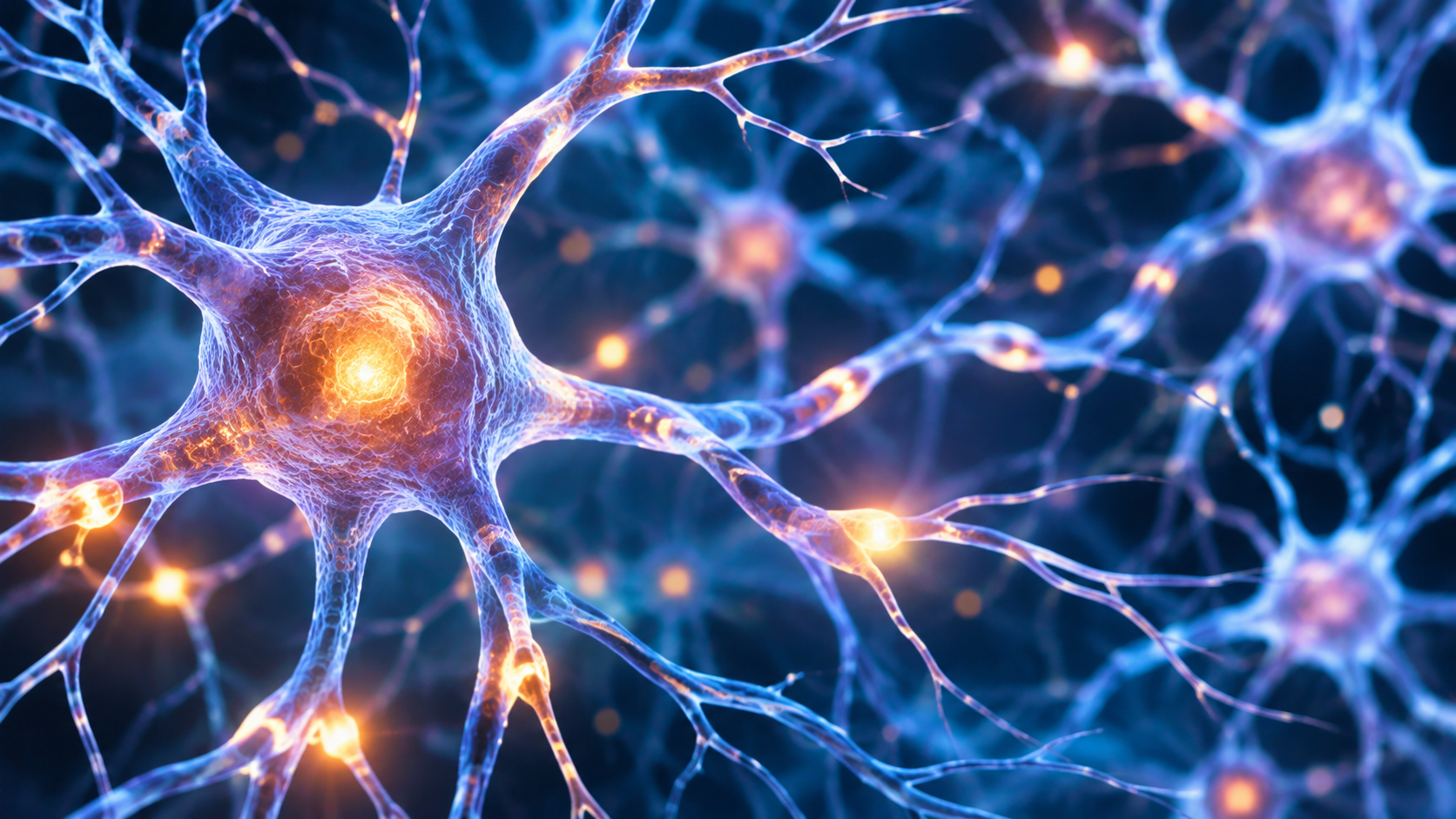
Can we change the way our brain works? Why does practice help us develop new skills, and why do some behaviours eventually become almost automatic? The answer lies in neuroplasticity – the remarkable ability of the brain to adapt and change throughout our lives.
Imagine deciding to learn a new language.
At first, every word requires effort. You struggle to remember expressions, confuse grammatical rules and repeatedly return to material you have already studied.
After several months of regular practice, however, you begin to understand entire sentences, and some words come to mind almost automatically.
What has changed?
Not just your knowledge. The processes through which your brain receives, stores and uses information have also changed.
This ability to adapt is known as neuroplasticity.
Neuroplasticity is one of the fundamental mechanisms that allows us to learn, develop habits, adapt to new circumstances and, in some cases, recover functions following brain injury.
However, neuroplasticity also has limitations.
It does not mean that we can change every brain function at will or that positive thinking alone can cure a neurological condition.
To understand the brain’s remarkable potential, we first need to explore how this process works.
What Is Neuroplasticity?
Neuroplasticity is the ability of the nervous system to change its structure, functioning and organisation in response to experience, learning, environmental conditions or injury.
The brain is not a static system that reaches its final form during childhood and remains unchanged throughout adulthood.
Instead, its neural networks can continue adapting across the lifespan.
These changes may involve:
- Strengthening or weakening connections between neurons.
- Changes in the efficiency of neural communication.
- Reorganisation of activity within brain networks.
- Structural changes in certain neuronal branches.
- Adaptation of systems involved in movement, perception, memory and behaviour.
Importantly, neuroplasticity does not necessarily involve the creation of new nerve cells.
Many changes associated with learning occur through modifications to existing neural connections.
This is one reason why the brain remains capable of acquiring new skills even in adulthood.
You can discover more about how the human brain functions in our article on Myths and Facts About the Brain.
How Does Neuroplasticity Work?
To understand neuroplasticity, imagine the brain as an extraordinarily complex network of billions of nerve cells.
These cells, called neurons, exchange information through electrical and chemical signals.
The points at which neurons communicate are called synapses.
When we acquire a new skill or repeatedly perform a particular action, the activity of the relevant neural networks may gradually change.
Some connections become more efficient.
Others weaken or are reorganised.
Through these processes, the brain adapts the way it processes information based on our experiences.
Synaptic Plasticity
Synaptic plasticity is the ability of connections between neurons to change their effectiveness.
Two important mechanisms are long-term potentiation (LTP) and long-term depression (LTD).
Under certain conditions, communication between neurons can become stronger, while under others it can become weaker.
These processes play essential roles in learning and memory.
Synaptic Pruning
The brain not only strengthens connections but can also eliminate or reorganise some of them.
This process is particularly important during development.
It helps refine neural networks so that information can be processed more efficiently.
However, synaptic pruning is only one of several mechanisms involved in neuroplasticity.
Functional Reorganisation
Under certain conditions, brain networks can change how they contribute to specific functions.
This is particularly important during recovery from some neurological injuries.
For example, following a stroke, rehabilitation may support the reorganisation of systems involved in movement and language.
The extent of recovery depends on many factors and cannot be guaranteed.
How Did Scientists Discover Neuroplasticity?
The idea that the nervous system can change through experience has a long scientific history.
As early as the late nineteenth and early twentieth centuries, researchers began discussing whether connections within the nervous system could be modified through learning.
In 1948, Polish neurophysiologist Jerzy Konorski described ideas relating to plastic changes in the nervous system.
In 1949, Canadian psychologist Donald Hebb published The Organization of Behavior, which significantly influenced scientific understanding of the neural mechanisms of learning.
His theory proposed that coordinated activity between neurons could contribute to strengthening their connections.
This principle is often summarised by the popular expression:
“Neurons that fire together wire together.”
Although this phrase simplifies much more complex biological mechanisms, it illustrates the importance of coordinated neural activity.
Later, researchers including Michael Merzenich and Eric Kandel made major contributions to our understanding of brain reorganisation, synaptic mechanisms and memory.
In 2000, Eric Kandel received the Nobel Prize in Physiology or Medicine, together with Arvid Carlsson and Paul Greengard, for discoveries concerning signal transduction in the nervous system.
Today, neuroplasticity is a fundamental concept in neuroscience, psychology, education and neurological rehabilitation.
Five Examples of Neuroplasticity in Everyday Life
1. Learning New Skills
When we begin playing a musical instrument, learning a language or practising a new sport, the brain must develop new patterns of information processing.
Initially, these activities require considerable attention and conscious effort.
With practice, certain processes become more efficient and increasingly automatic.
This is associated with changes in the functioning of neural networks.
However, repetition alone is not always sufficient.
Effective learning also depends on the quality of practice, feedback, appropriate levels of difficulty and sufficient recovery time.
2. Developing Habits
Imagine checking your phone immediately after waking up every morning.
Over time, this action may become an almost automatic habit.
Such patterns develop through repetition, environmental context and learned associations between particular cues and behaviours.
Neuroplasticity contributes both to the development of beneficial habits and to the maintenance of behaviours we may wish to change.
It should therefore not be presented as a process that always produces positive outcomes.
3. Recovering from Brain Injury
Following a stroke or traumatic brain injury, certain functions may become impaired.
For some patients, appropriate rehabilitation can support recovery through repeated practice of movements, language tasks and other activities.
This process may involve changes in the organisation and activity of brain networks.
However, recovery depends on the location and severity of the injury, age, overall health and access to appropriate treatment.
Neuroplasticity creates opportunities for adaptation, but it does not guarantee complete recovery.
4. Changing Learned Fear Responses
When someone repeatedly avoids a situation because it causes anxiety, that avoidance may reinforce the belief that the situation is dangerous.
Exposure therapy is used for certain anxiety disorders and involves gradually and carefully approaching feared situations or sensations.
The goal is not simply to eliminate unpleasant feelings.
More importantly, the person can develop new learning about threat, safety and their ability to cope.
Changes in learned fear responses are associated with plasticity in brain systems involved in fear and memory.
5. Adapting to a New Environment
Starting a new job, moving to another city or taking on unfamiliar responsibilities requires learning new rules, routines and behaviours.
Initially, this may demand greater attention and effort.
As experience accumulates, many tasks become more familiar.
The brain adapts through learning and changes in the functioning of neural systems.
However, this does not mean that every life change necessarily produces major measurable structural changes in the brain.
Can We Change Negative Thinking Patterns?
One of the most popular ideas associated with neuroplasticity is that we can “rewire” our brains through positive thinking.
This claim requires careful clarification.
Thinking patterns and behavioural habits can change through learning and experience.
However, there is insufficient scientific evidence to claim that simply repeating positive statements automatically creates new neural pathways or produces lasting improvements in mental health.
For example, someone experiencing persistent anxiety may have developed a habit of expecting the worst possible outcome in certain situations.
Cognitive behavioural therapy (CBT) can help identify these interpretations and practise alternative behavioural responses.
This process involves learning, practice and accumulating new experiences.
Neuroplasticity forms part of the biological foundation of such changes.
However, neuroplasticity alone does not explain the effectiveness of every psychological technique.
The brain can change, but this does not mean that every method promoted as “brain rewiring” is scientifically effective.
How Does Stress Affect Neuroplasticity?
Stress is a normal physiological and psychological response to challenges.
Short-term stress is not necessarily harmful and, under certain conditions, may support attention and memory formation.
However, prolonged or excessive stress can negatively affect processes involved in learning and memory.
Research suggests that stress hormones and other physiological mechanisms can influence activity and plasticity in particular brain structures.
Special attention is given to the hippocampus, prefrontal cortex and amygdala.
The hippocampus plays an important role in memory.
The prefrontal cortex contributes to planning, attention and cognitive control.
The amygdala participates in processing emotionally significant stimuli and potential threats.
These systems interact, and the effects of stress depend on its intensity, duration and individual characteristics.
It is important to avoid the claim that chronic stress inevitably causes irreversible brain damage.
Its effects are considerably more complex and vary between individuals.
How Can We Support Brain Health and Learning?
There is no universal method for maximising neuroplasticity.
However, several habits and environmental conditions support brain functioning, learning and adaptation.
1. Learn New Skills
Choose an activity that interests you and offers an appropriate challenge.
This could involve learning a language, playing a musical instrument, dancing, painting or developing a professional skill.
Rather than constantly searching for something new, it is often more useful to practise a chosen skill consistently.
Use feedback and gradually increase the level of difficulty.
2. Get Enough Sleep
Sleep plays an important role in learning and memory.
During sleep, processes occur that contribute to stabilising and reorganising newly acquired information.
Prolonged sleep deprivation can therefore interfere with attention, memory and recovery.
Most adults are advised to obtain approximately seven to nine hours of sleep each night, although individual needs vary.
You can learn more in our article What Is Sleep and Why Is It Important for Us?.
3. Maintain Regular Physical Activity
Physical activity is one of the most extensively studied factors associated with brain health.
A large scientific umbrella review published in 2025 found that exercise can improve general cognition, memory and executive functioning.
Possible mechanisms include changes in blood circulation, neurotrophic factors and the functioning of neural networks.
Not every workout needs to be intense.
Walking, swimming, cycling, dancing and other suitable forms of movement can contribute to a healthy lifestyle.
4. Practise Stress Management Techniques
Practices such as mindfulness, relaxation and attention regulation exercises may be helpful for some people.
Neuroimaging research has investigated whether these practices are associated with functional and structural brain changes.
The findings are interesting but not entirely consistent.
It has not been established that every form of meditation increases neural connections or that a particular technique can reliably “rewire” the brain.
A more realistic goal is to choose approaches that help you manage stress and maintain everyday functioning.
5. Maintain Social Relationships and Intellectual Engagement
Communication, shared activities and participation in meaningful experiences provide opportunities for learning and cognitive engagement.
Social relationships are also important for mental health.
There is no need to turn every conversation or hobby into a brain-training exercise.
What matters more is maintaining an active and varied life that reflects your abilities, interests and circumstances.
How Long Does Neuroplasticity Take?
There is no universal answer.
Different mechanisms of neuroplasticity operate across different timescales.
Some changes in synaptic functioning can occur relatively quickly.
Learning complex skills may require weeks, months or years of consistent practice.
Following brain injury, recovery processes may also unfold at different rates depending on the condition and rehabilitation.
This is why popular claims that the brain can be completely “rewired” in 21 or 30 days should not be treated as universal scientific principles.
The timescale depends on what is changing, how that change is measured and which conditions support it.
Does Neuroplasticity Have Limitations?
Yes.
The brain’s capacity for change is real, but it is not unlimited.
Neuroplasticity depends on age, health conditions, the type of learning, the severity of injury and many biological factors.
Furthermore, not every change is beneficial.
For example, in chronic pain, addiction and certain anxiety disorders, learned neural responses may contribute to maintaining difficulties.
This is sometimes described as maladaptive plasticity.
Neuroplasticity is therefore not synonymous with improvement.
It is the capacity for change.
Whether that change is beneficial depends on the specific processes and circumstances involved.
What Does Neuroplasticity Mean for Mental Health?
One of the most important implications of neuroplasticity research is that learned psychological responses and behavioural patterns are not necessarily permanent.
People can gradually develop new emotional regulation skills, more adaptive coping strategies and different responses to familiar situations.
This has important implications for psychotherapy, rehabilitation and education.
However, the biological mechanism should not be confused with a promise of treatment.
Neuroplasticity does not mean that someone can overcome depression, an anxiety disorder or the effects of trauma simply through positive thinking.
When psychological symptoms persist, appropriate professional assessment is important.
At Somenso, we understand brain functioning, stress and mental health as interconnected processes.
When prolonged stress begins affecting sleep, concentration, emotions and everyday functioning, early recognition can be an important step towards appropriate support.
You can explore professional support and interventions at Somenso.
The Brain’s True Superpower Is Its Ability to Adapt
Neuroplasticity is one of the most remarkable properties of the human nervous system.
It demonstrates that the brain is not a fixed structure that simply stores information.
It is a dynamic biological system that responds to experience, learning and environmental changes.
This ability allows us to acquire new skills, develop habits and, in certain circumstances, recover some functions following injury.
However, neuroplasticity is not a magical technique for personal development.
It is a scientifically established process involving complex biological mechanisms.
The brain’s true superpower is not that we can change it whenever we wish, but that it retains the ability to learn, adapt and develop throughout our lives.
Scientific sources
- Hebb, D. O. (1949). The Organization of Behavior: A Neuropsychological Theory. Wiley.
- Kandel, E. R. (2001). The Molecular Biology of Memory Storage: A Dialogue Between Genes and Synapses. Science, 294(5544), 1030–1038. https://doi.org/10.1126/science.1067020
- Kleim, J. A., & Jones, T. A. (2008). Principles of Experience-Dependent Neural Plasticity: Implications for Rehabilitation After Brain Damage. Journal of Speech, Language, and Hearing Research, 51, S225–S239. https://doi.org/10.1044/1092-4388(2008/018)
- Feldman, D. E. (2009). Synaptic Mechanisms for Plasticity in Neocortex. Annual Review of Neuroscience, 32, 33–55. https://doi.org/10.1146/annurev.neuro.051508.135516
- McEwen, B. S., & Morrison, J. H. (2013). The Brain on Stress: Vulnerability and Plasticity of the Prefrontal Cortex Over the Life Course. Neuron, 79(1), 16–29. https://doi.org/10.1016/j.neuron.2013.06.028
- Singh, B., et al. (2025). Effectiveness of Exercise for Improving Cognition, Memory and Executive Function: A Systematic Umbrella Review and Meta-meta-analysis. British Journal of Sports Medicine. https://doi.org/10.1136/bjsports-2024-108589
- The Effect of Aerobic Exercise in Neuroplasticity, Learning, and Cognition: A Systematic Review. (2024). Cureus, 16(2), e54021. https://pubmed.ncbi.nlm.nih.gov/38476815/
- Neurobiological Changes Induced by Mindfulness and Meditation: A Systematic Review. (2024). https://pmc.ncbi.nlm.nih.gov/articles/PMC11591838/
- Mindfulness Practice and Increases in Gray Matter Density, Gray Matter Volume, and Cortical Thickness: A Scoping Review. (2026). https://pubmed.ncbi.nlm.nih.gov/42192796/