
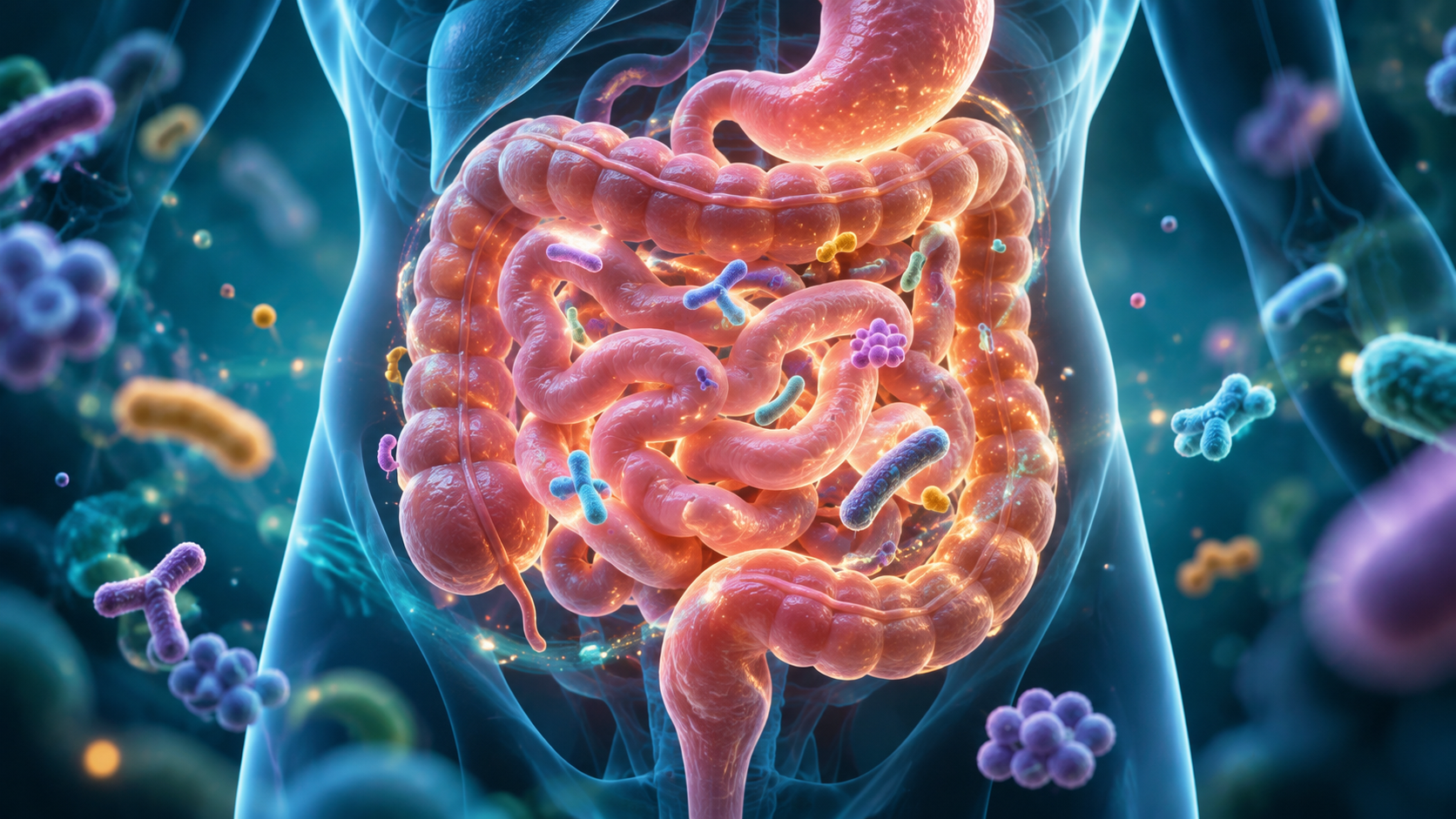
Trillions of microorganisms live inside our digestive system. Although we rarely think about them, these tiny inhabitants help us process food, support our immune system and produce substances that interact with many functions in the body. Scientists are also discovering fascinating connections between the gut microbiome, stress and mental health. But how much do we really know about these relationships?
When we think about our health, we usually focus on our heart, brain, lungs or immune system.
Yet one of the most complex biological ecosystems in our body is located in our intestines.
This ecosystem contains trillions of microorganisms, including bacteria, viruses, fungi and other microscopic life forms.
Together, these microorganisms interact with the food we eat, the cells lining our intestines and our immune system.
They are involved in processes that extend far beyond digestion.
In recent years, scientific research has revealed associations between the gut microbiome and metabolic health, immune function and certain aspects of brain activity.
These discoveries have created growing interest in the relationship between what we eat, how our gut functions and how we feel.
However, it is important to distinguish established biological functions from emerging scientific hypotheses.
The gut microbiome is an important part of human health, but it is not a simple switch that determines whether we are healthy, happy or stressed.
What exactly is the gut microbiome?
The digestive tract is home to a complex community of microorganisms known as the gut microbiota.
Although the terms microbiota and microbiome are often used interchangeably, they are not entirely identical.
Gut microbiota refers to the microorganisms living in the intestinal environment.
Gut microbiome is a broader concept that encompasses the microorganisms, their genetic material and, in contemporary ecological definitions, their surrounding environment and biological interactions.
Bacteria are the most extensively studied members of this ecosystem, but viruses, archaea, fungi and other microorganisms also play a role.
Each person’s gut microbial community is different.
Its composition is influenced by factors such as age, diet, medication, environment, health conditions and previous exposures.
Even individuals with very similar genetic backgrounds can have different gut microbial communities.
This is one reason why scientists increasingly recognise that there may be no single ideal microbiome composition that applies to everyone.
Five fascinating facts about the gut microbiome
1. The gut contains an enormous number of microorganisms
The digestive tract contains trillions of microbial cells, forming a complex and dynamic ecosystem.
These microorganisms interact continuously with one another and with the human body.
2. Microbial genes expand our metabolic capabilities
The collective genetic material of intestinal microorganisms contains millions of genes.
These genes encode functions that allow microbes to process dietary substances and produce compounds that human cells cannot generate in exactly the same way.
However, the precise number of microbial genes depends on the population studied, the sequencing methods used and how genes are counted.
3. Every person’s microbiome is different
Even identical twins do not have identical gut microbial communities.
Studies of large populations show that diet, medication and environmental exposures contribute to differences between individuals.
4. Gut microbes help process dietary fibre
Many gut bacteria can break down certain dietary fibres that human digestive enzymes cannot fully digest.
This produces metabolites that can influence intestinal function and other physiological processes.
5. The microbiome changes over time
The intestinal ecosystem is not fixed.
Dietary changes, illness, antibiotics and other factors can alter the composition and activity of the microbial community.
Some changes are temporary, while others may persist.
What does the gut microbiome actually do?
The gut microbiome has several well-established functions.
It helps us process food
Human digestive enzymes cannot break down every component of the food we consume.
Certain gut microorganisms can ferment dietary fibres and other substances that reach the large intestine.
Through this process, they produce compounds called short-chain fatty acids, including acetate, propionate and butyrate.
These substances have important roles in intestinal physiology.
Butyrate, for example, is a major energy source for many cells lining the colon.
Short-chain fatty acids are also involved in immune and metabolic signalling.
It supports immune function
The intestinal immune system is constantly interacting with microorganisms.
Some microbial communities contribute to the development and regulation of normal immune responses.
They also interact with the intestinal barrier, which helps separate the internal environment of the body from substances present inside the gut.
These interactions are complex and depend on the type of microorganisms, their metabolic activity and the condition of the host.
It helps protect against pathogens
Resident microorganisms can compete with potentially harmful organisms for nutrients and ecological space.
Some also produce substances that inhibit the growth of particular pathogens.
This protective function is often described as colonisation resistance.
However, not every microorganism can be classified permanently as beneficial or harmful.
Its effects may depend on the surrounding microbial community and the health of the person.
It participates in vitamin metabolism
Certain intestinal microorganisms can produce vitamins, including some B vitamins and vitamin K-related compounds.
However, microbial production does not necessarily mean that all these vitamins are available in sufficient amounts for the body.
A balanced diet remains essential for meeting nutritional requirements.
The gut–brain axis: how do our intestines communicate with the brain?
One of the most interesting areas of microbiome research is the relationship between the digestive system and the nervous system.
This relationship is often called the gut–brain axis.
It describes communication between the gastrointestinal tract and the central nervous system.
The relationship is bidirectional.
The brain can influence digestive processes, while signals originating in the gut can influence nervous system activity.
Several mechanisms contribute to this communication.
The nervous system
The digestive tract contains an extensive network of neurons known as the enteric nervous system.
It communicates with the central nervous system through multiple pathways, including the vagus nerve.
These neural pathways help regulate digestion and transmit information about the internal state of the body.
The immune system
Gut microorganisms interact with immune cells and inflammatory signalling pathways.
Because immune activity and nervous system functioning are interconnected, changes in intestinal immune responses may influence broader physiological processes.
Microbial metabolites
Gut microorganisms produce metabolites that can interact with intestinal cells, immune processes and metabolic signalling.
Researchers are investigating how some of these substances may contribute to communication between the gut and brain.
The stress response
The brain’s response to stress can influence intestinal motility, secretion, sensitivity and other gastrointestinal functions.
Scientists are also investigating whether changes in gut microbial communities may influence stress-related physiological responses.
Evidence from animal studies is extensive, but establishing the direction and clinical significance of these relationships in humans remains challenging.
Does the gut microbiome influence mental health?
Research has identified associations between gut microbial characteristics and conditions such as depression and anxiety.
These findings have generated considerable interest in the possibility that the microbiome may contribute to psychological functioning.
However, association does not establish causation.
For example, people experiencing depression may have changes in sleep, diet, physical activity, medication use and daily routines.
These factors can also influence the microbiome.
It is therefore difficult to determine whether microbial differences contribute to psychological symptoms, result from them or reflect other shared influences.
Scientific reviews published in 2025 and 2026 emphasise the need for larger longitudinal studies and controlled clinical trials.
Researchers are investigating potential mechanisms involving microbial metabolites, immune signalling and neuroendocrine processes.
But we cannot currently conclude that a particular bacterial species causes depression or that changing the microbiome will reliably treat it.
The gut–brain relationship is scientifically important, but microbiome interventions are not a substitute for established psychological or psychiatric treatment.
What is the connection between the microbiome and serotonin?
Serotonin is often described as a neurotransmitter involved in mood regulation.
An interesting fact is that approximately 90–95% of the body’s serotonin is produced in the gastrointestinal tract, primarily by specialised cells in the intestinal lining.
Gut microorganisms can influence some of the biological processes involved in intestinal serotonin production and signalling.
However, an important distinction is often overlooked.
Serotonin produced in the gut does not freely cross the blood–brain barrier.
This means that increasing intestinal serotonin does not automatically increase serotonin activity in the brain.
Serotonin in the gastrointestinal system has important local functions, including participation in gut motility and signalling.
Brain serotonin is regulated through distinct mechanisms.
The amino acid tryptophan is a precursor used in serotonin synthesis, and dietary sources include eggs, fish, poultry, dairy products, nuts and seeds.
However, eating more tryptophan-rich foods does not guarantee improved mood through increased brain serotonin.
Mental health is influenced by multiple biological, psychological and social factors.
Why does stress sometimes affect our stomach?
Many people experience digestive changes during stressful periods.
Before an important meeting, we may feel discomfort in our stomach.
During prolonged stress, some people experience changes in bowel habits, abdominal discomfort or altered appetite.
These experiences reflect interactions between the brain, autonomic nervous system, stress-related hormones and digestive function.
Stress can influence gastrointestinal motility and sensitivity.
It may also affect dietary behaviour, sleep and other factors associated with the intestinal environment.
This does not mean that all digestive symptoms are psychological.
Persistent abdominal pain, ongoing diarrhoea, blood in the stool, unexplained weight loss or other concerning symptoms require appropriate medical assessment.
A holistic approach recognises the connection between psychological and physical processes without assuming that one explains every symptom.
Is a more diverse gut microbiome always healthier?
Microbial diversity is often presented as an indicator of good gut health.
In many studies, certain patterns of microbial diversity are associated with favourable health characteristics.
However, diversity is only one aspect of the microbiome.
The presence of particular microorganisms, the functions they perform and the surrounding intestinal environment may be equally important.
Some healthy microbial communities are less diverse than others for physiological reasons.
A larger number of microbial species is therefore not automatically better in every situation.
Similarly, the presence of a particular bacterium cannot always be interpreted as healthy or unhealthy without additional context.
Researchers increasingly focus on the functional activity and ecological stability of the microbiome rather than simply counting species.
This is why commercial microbiome tests that classify bacteria as universally good or bad should be interpreted cautiously.
How does diet affect the gut microbiome?
Diet is one of the most important modifiable factors associated with gut microbial composition and function.
Different microorganisms use different dietary substances.
As a result, our habitual eating patterns can influence which microbial communities thrive and what metabolites they produce.
What did the PREDICT study reveal?
The PREDICT research programme has provided important evidence about the relationship between diet, the gut microbiome and metabolic health.
A study published in Nature Medicine in 2021 analysed microbiome samples and detailed dietary information from 1,098 participants.
Researchers identified associations between particular microbial species, long-term dietary patterns and markers of cardiometabolic health.
Dietary patterns rich in nutritious plant foods were associated with microbial profiles that also correlated with more favourable metabolic indicators.
These findings support the importance of overall dietary quality.
However, because much of the analysis was observational, the results do not establish that every identified microorganism directly causes better health outcomes.
The study also demonstrated considerable differences between individuals.
This supports the view that the relationship between diet and the microbiome is complex and personalised.
Are ultra-processed foods harmful to the microbiome?
Ultra-processed foods often contain combinations of refined ingredients, additives and relatively small amounts of dietary fibre.
Diets dominated by certain ultra-processed products may be associated with less favourable metabolic and microbial characteristics.
However, not every processed food has the same nutritional profile.
Food processing alone does not determine whether a product is healthy or unhealthy.
For example, plain yoghurt, canned beans and frozen vegetables can all be useful components of a balanced diet.
The stronger practical recommendation is to prioritise overall dietary quality, sufficient fibre and a variety of minimally processed plant foods.
Researchers are continuing to investigate how particular additives and dietary patterns affect intestinal microorganisms.
Can fermented foods improve gut health?
Fermented foods include yoghurt with live cultures, kefir, sauerkraut, kimchi and other traditionally fermented products.
Some contain living microorganisms, although their composition varies significantly.
A controlled dietary intervention published in Cell in 2021 investigated the effects of fermented foods and a high-fibre diet on the gut microbiome and immune markers.
The researchers observed increased microbial diversity and changes in several inflammatory markers in the fermented-food group.
These findings are promising.
However, the study was relatively small, and its results should not be interpreted as proof that fermented foods prevent or treat specific diseases.
Not all fermented foods contain live microorganisms by the time they are consumed.
Some are also high in salt or may not be suitable for everyone.
The best approach is to include appropriate fermented foods as part of an overall balanced diet, taking individual tolerance into account.
What about probiotics and prebiotics?
The terms probiotics and prebiotics are frequently used in discussions about the gut microbiome, but they describe different things.
Probiotics are live microorganisms that, when administered in adequate amounts, confer a health benefit on the host.
Prebiotics are substrates selectively used by host microorganisms that confer a health benefit.
Not every fermented food is automatically a probiotic, and not every fibre is classified as a prebiotic.
Some probiotic strains have evidence supporting their use for specific gastrointestinal conditions.
However, benefits depend on the strain, dose, population and intended purpose.
There is currently insufficient evidence to recommend probiotics generally as a treatment for stress, depression or anxiety.
For people with significant medical conditions or weakened immune systems, probiotic use should be discussed with a healthcare professional.
Seven practical ways to support your gut microbiome
The good news is that supporting gut health does not necessarily require expensive supplements or complicated testing.
Everyday dietary and lifestyle choices can make a meaningful contribution.
1. Eat a variety of plant foods
Include different vegetables, fruits, legumes, whole grains, nuts and seeds in your diet.
These foods provide dietary fibres and other compounds that interact with the gut microbiome.
2. Increase fibre gradually
Beans, lentils, oats, vegetables and whole grains are useful sources of dietary fibre.
If your current fibre intake is low, increase it gradually to reduce the likelihood of bloating or discomfort.
Certain gastrointestinal conditions may require personalised dietary advice.
3. Include fermented foods if you tolerate them
Plain yoghurt, kefir and other suitable fermented foods can contribute to dietary variety.
Choose products according to your health needs and preferences.
4. Focus on your overall dietary pattern
Rather than searching for a single superfood, aim for consistent nutritional quality.
A diverse diet containing adequate protein, fibre and essential nutrients is more useful than relying on one product to change the microbiome.
5. Avoid unnecessary antibiotic use
Antibiotics can alter intestinal microbial communities.
They are essential for treating certain bacterial infections, but should only be used when medically indicated.
Never stop or avoid prescribed antibiotics solely to protect your microbiome.
6. Maintain regular physical activity and sleep
Exercise and adequate sleep support general metabolic and psychological health.
Researchers are studying their relationships with the microbiome, although the mechanisms and direction of these effects are not yet fully understood.
7. Manage stress without expecting a microbiome cure
Stress management can support quality of life and reduce the burden of persistent psychological tension.
However, breathing exercises, meditation and relaxation techniques should not be presented as guaranteed ways to alter gut microbial composition.
Their value lies primarily in supporting psychological regulation and healthier daily routines.
Should everyone take a microbiome test?
Commercial gut microbiome tests have become increasingly popular.
They often provide detailed lists of bacterial species and offer recommendations based on the detected microorganisms.
Although sequencing technologies can identify many microbial characteristics, interpreting the results for an individual is more difficult.
There is currently no universally accepted definition of the ideal gut microbiome.
Many commercial tests have limited ability to diagnose disease or determine which dietary intervention will improve a particular person’s health.
For most healthy individuals, a balanced diet and appropriate medical care are more useful starting points than routine commercial microbiome testing.
If you have persistent digestive symptoms, your healthcare professional can recommend validated investigations based on your clinical presentation.
The future of microbiome research
The human microbiome is one of the most active fields in contemporary biomedical research.
Scientists are investigating whether specific microbial patterns can help predict disease risk, guide dietary interventions or support the development of new treatments.
Research is also examining the possibility of microbiome-based interventions for certain gastrointestinal and metabolic conditions.
In mental health, the field is still developing.
Large, well-designed human studies are needed to determine which microbiome changes are causes, consequences or markers of psychological conditions.
Future discoveries may lead to more personalised approaches to prevention and treatment.
But scientific progress requires careful separation of promising mechanisms from demonstrated clinical benefits.
A healthy gut is part of a healthy life
The gut microbiome is much more than a collection of bacteria involved in digestion.
It is a dynamic ecosystem that interacts with the immune system, metabolism and intestinal physiology, while participating in complex communication pathways connecting the gut and brain.
Our understanding of these relationships is growing rapidly.
Yet the most useful recommendations remain surprisingly practical.
Eating a varied, fibre-rich diet, maintaining appropriate physical activity, protecting sleep and seeking professional help when symptoms occur are valuable steps towards better health.
The microbiome is not the sole explanation for our physical or mental wellbeing.
Rather, it is one important component of the complex biological systems that support our daily functioning.
Looking after our gut health means supporting the conditions in which our entire body can function well – without expecting one food, supplement or microorganism to provide all the answers.
Scientific sources
- Berg, G., et al. (2020). Microbiome Definition Re-visited: Old Concepts and New Challenges. Microbiome, 8, 103. https://doi.org/10.1186/s40168-020-00875-0
- Asnicar, F., Berry, S. E., Valdes, A. M., et al. (2021). Microbiome Connections with Host Metabolism and Habitual Diet from 1,098 Deeply Phenotyped Individuals. Nature Medicine, 27, 321–332. https://doi.org/10.1038/s41591-020-01183-8
- Wastyk, H. C., et al. (2021). Gut-Microbiota-Targeted Diets Modulate Human Immune Status. Cell, 184(16), 4137–4153.e14. https://doi.org/10.1016/j.cell.2021.06.019
- Mawe, G. M., & Hoffman, J. M. (2013). Serotonin Signalling in the Gut–Functions, Dysfunctions and Therapeutic Targets. Nature Reviews Gastroenterology & Hepatology, 10, 473–486. https://doi.org/10.1038/nrgastro.2013.105
- Banskota, S., Ghia, J. E., & Khan, W. I. (2019). Serotonin in the Gut: Blessing or a Curse. Biochimie, 161, 56–64. https://doi.org/10.1016/j.biochi.2018.06.008
- Cryan, J. F., et al. (2019). The Microbiota-Gut-Brain Axis. Physiological Reviews, 99(4), 1877–2013. https://doi.org/10.1152/physrev.00018.2018
- Segev, T., et al. (2026). Diet–Microbiome Associations in 10,068 Individuals from the Human Phenotype Project to Guide Personalized Nutrition. Nature Medicine, 32, 1884–1894. https://doi.org/10.1038/s41591-026-04312-x
- Hill, C., et al. (2014). Expert Consensus Document: The International Scientific Association for Probiotics and Prebiotics Consensus Statement on the Scope and Appropriate Use of the Term Probiotic. Nature Reviews Gastroenterology & Hepatology, 11, 506–514. https://doi.org/10.1038/nrgastro.2014.66